Frank L. Mitchell Trauma Center
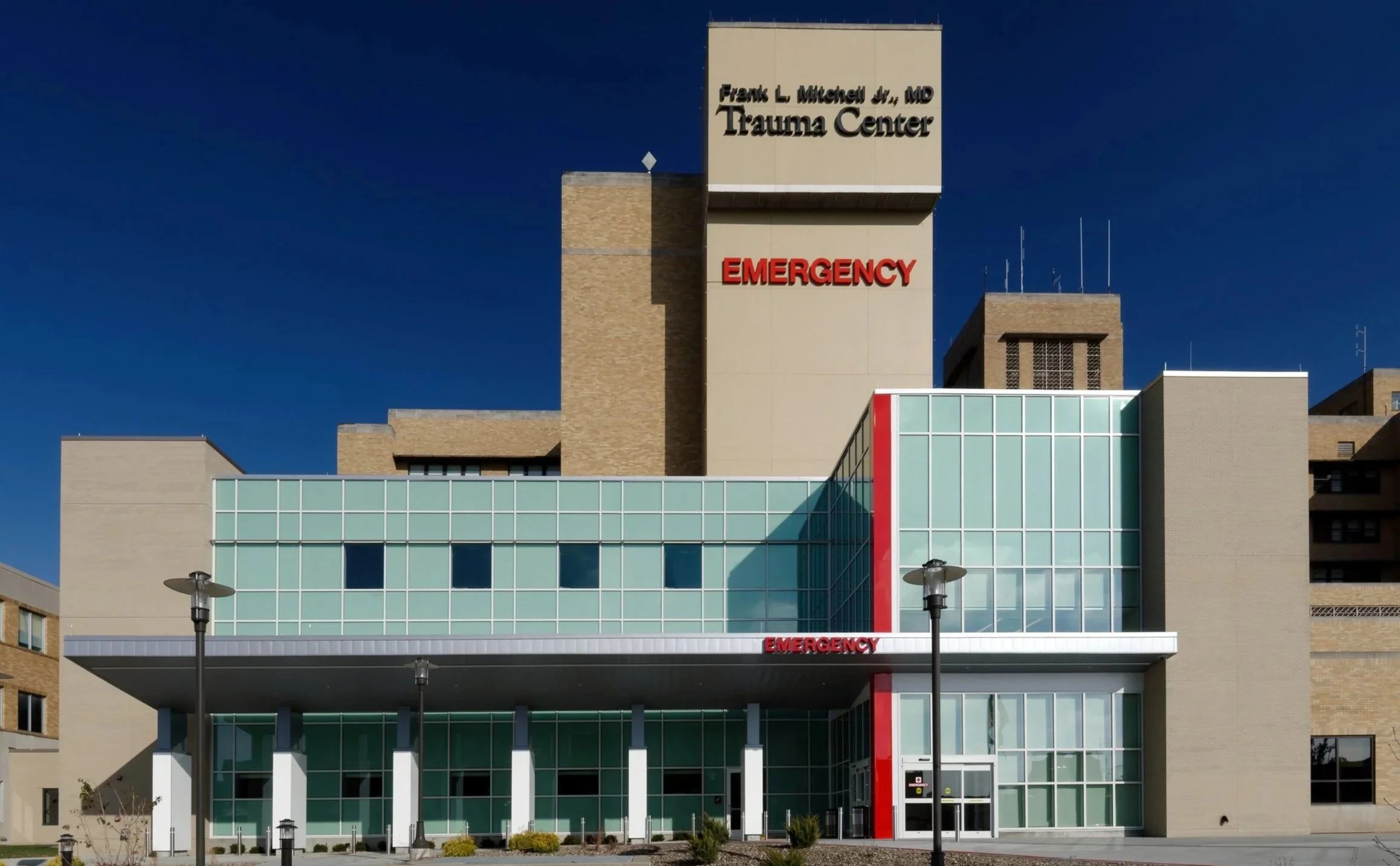
Designing Stability for High-Stakes Emergency Care
The design of the MU Healthcare Emergency Department and Trauma Center addresses the most high-stakes environment in healthcare with a focus on calming the chaos. In a setting defined by urgency, the architecture acts as a stabilizing force, providing clarity for staff and a sense of "groundedness" for patients and their families.
Client:
MU Health
Location:
Columbia, MO
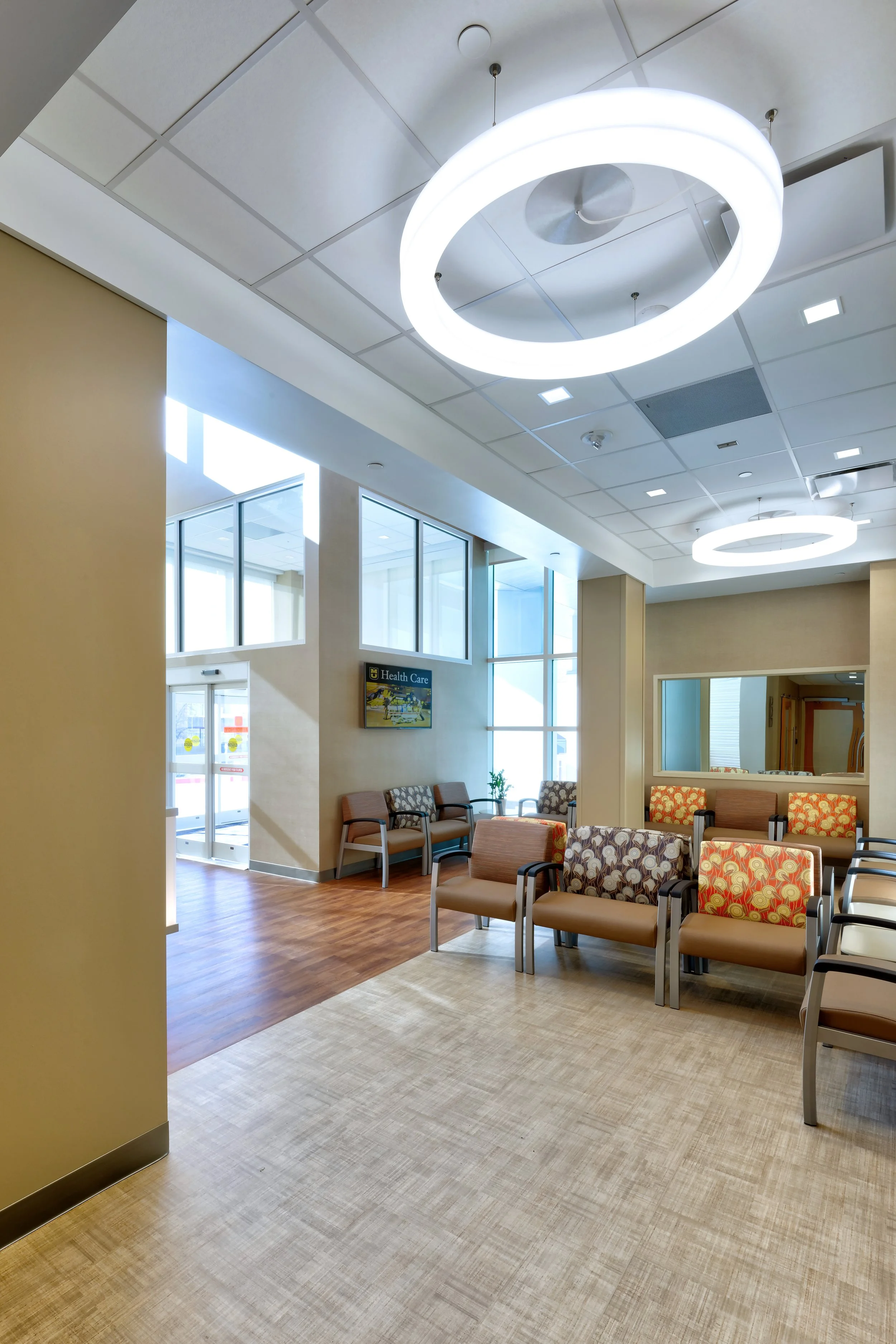
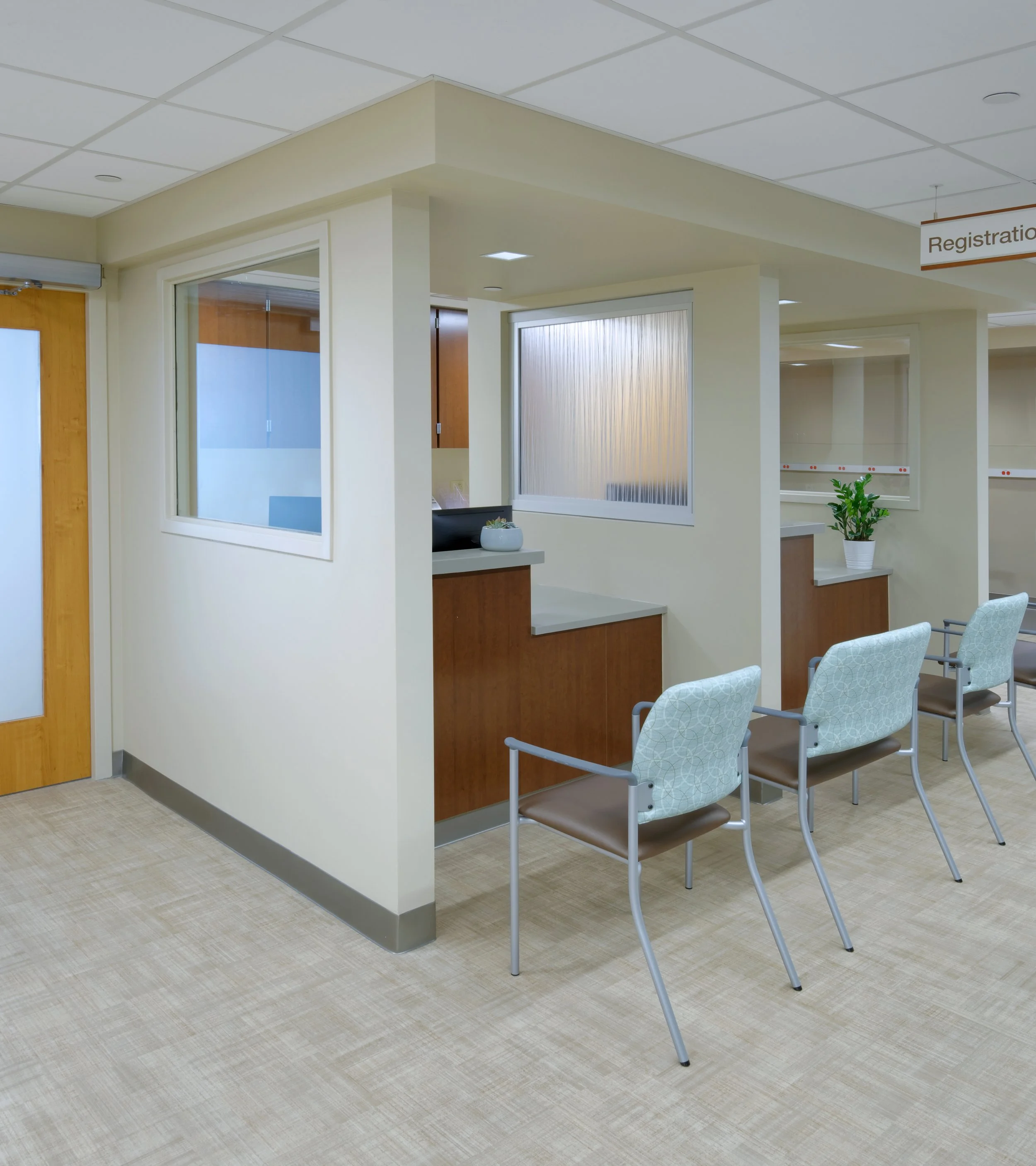
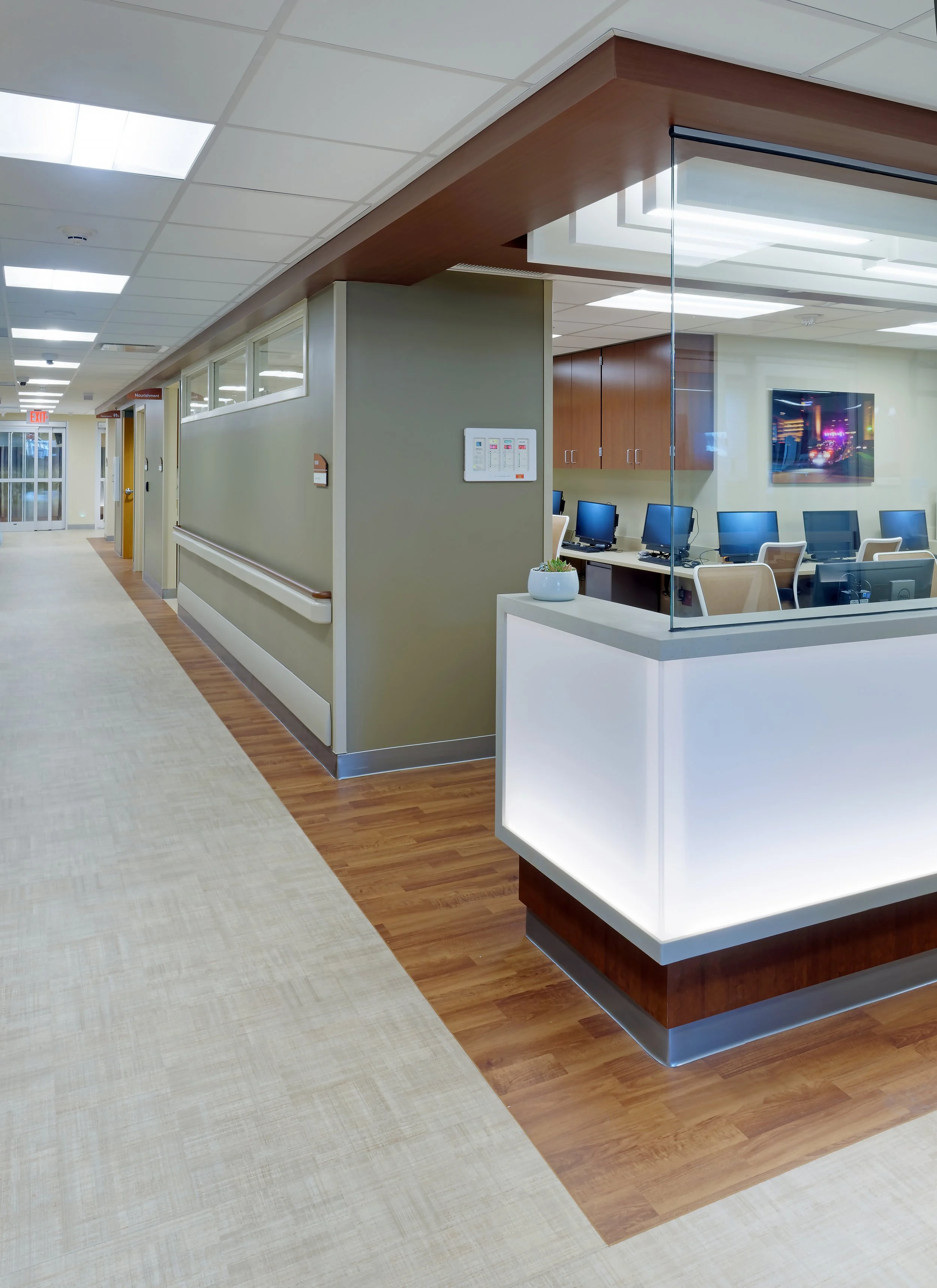
Design Philosophy in Practice
Function as the Foundation; Healing as the Purpose
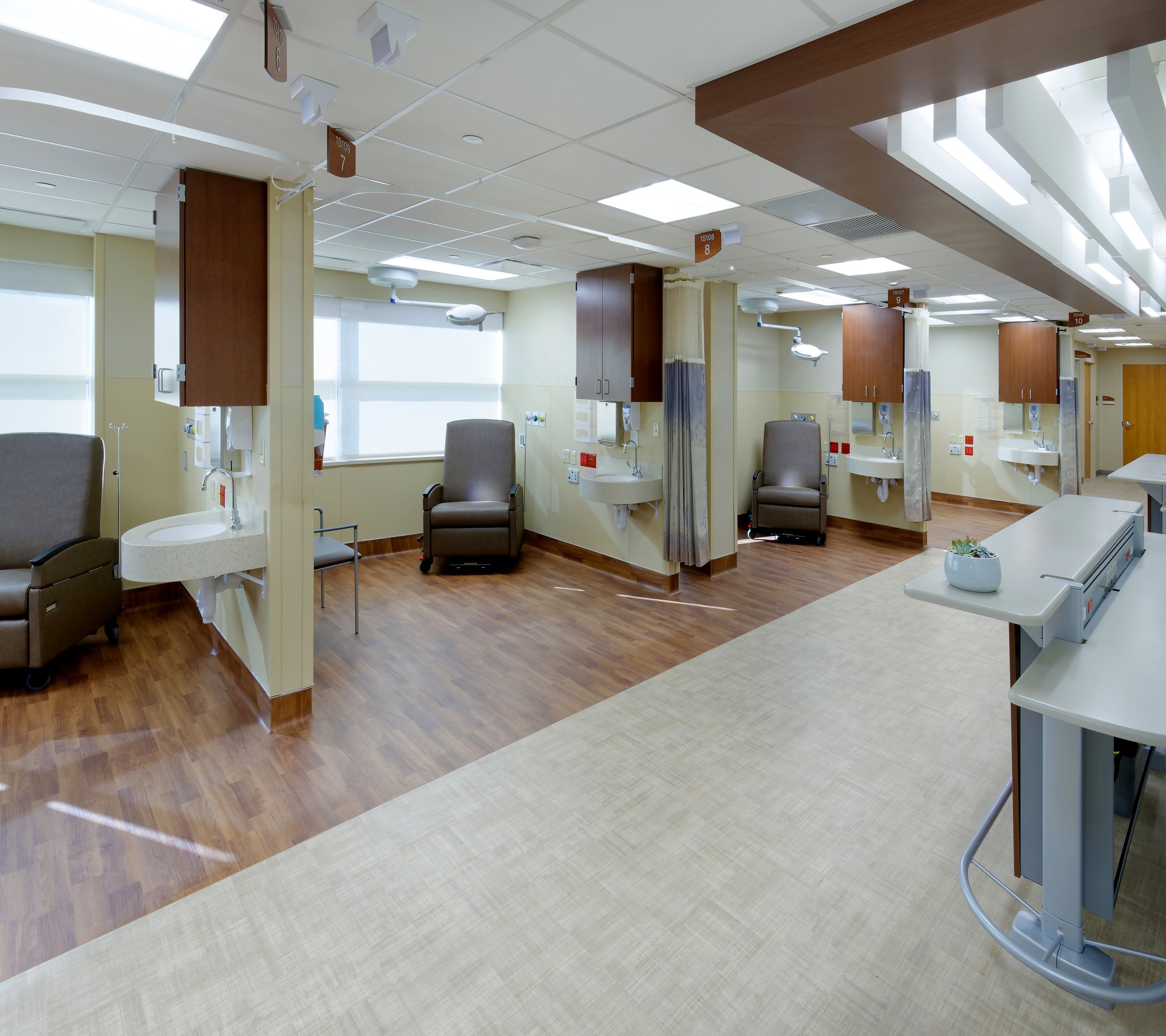
The trauma center is a machine for saving lives, yet the design refuses the "clinical compromise." The exterior’s prominent glass and steel signaling (marked by the bold red "EMERGENCY" verticality) ensures immediate recognition. Inside, the environment shifts toward human intuition—utilizing warm, residential-inspired cabinetry and soft-patterned seating to mitigate the inherent stress of a critical care visit.
Equity in Atmosphere & Biophilic Integration
Natural light is utilized as a vital clinical tool. By incorporating large exterior windows and frosted glass partitions, the design ensures that even the deepest interior registration and treatment zones feel connected to the outside world. This commitment to "clear air and light" reduces the disorientation often experienced in windowless emergency departments.
Caring for the Caregivers
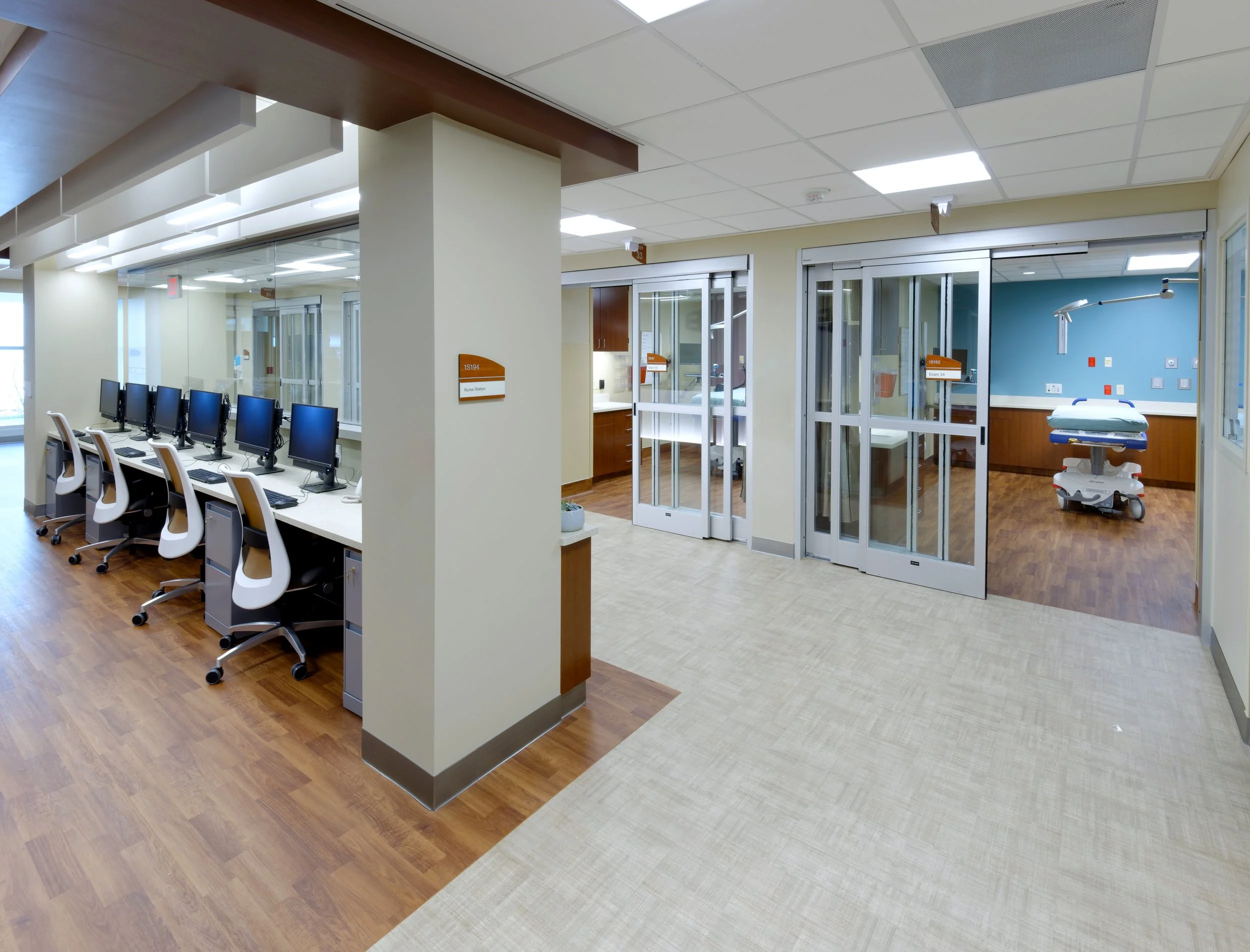
The "Invisible User" is at the heart of the layout. The open-plan nurse stations and wide, unobstructed corridors are designed to support the intense shifts of trauma staff. By prioritizing ergonomic sightlines and acoustic control, the architecture helps prevent burnout, ensuring that the staff’s environment is as supportive as the care they provide.
Evidence-Led, Human-Centered Precision
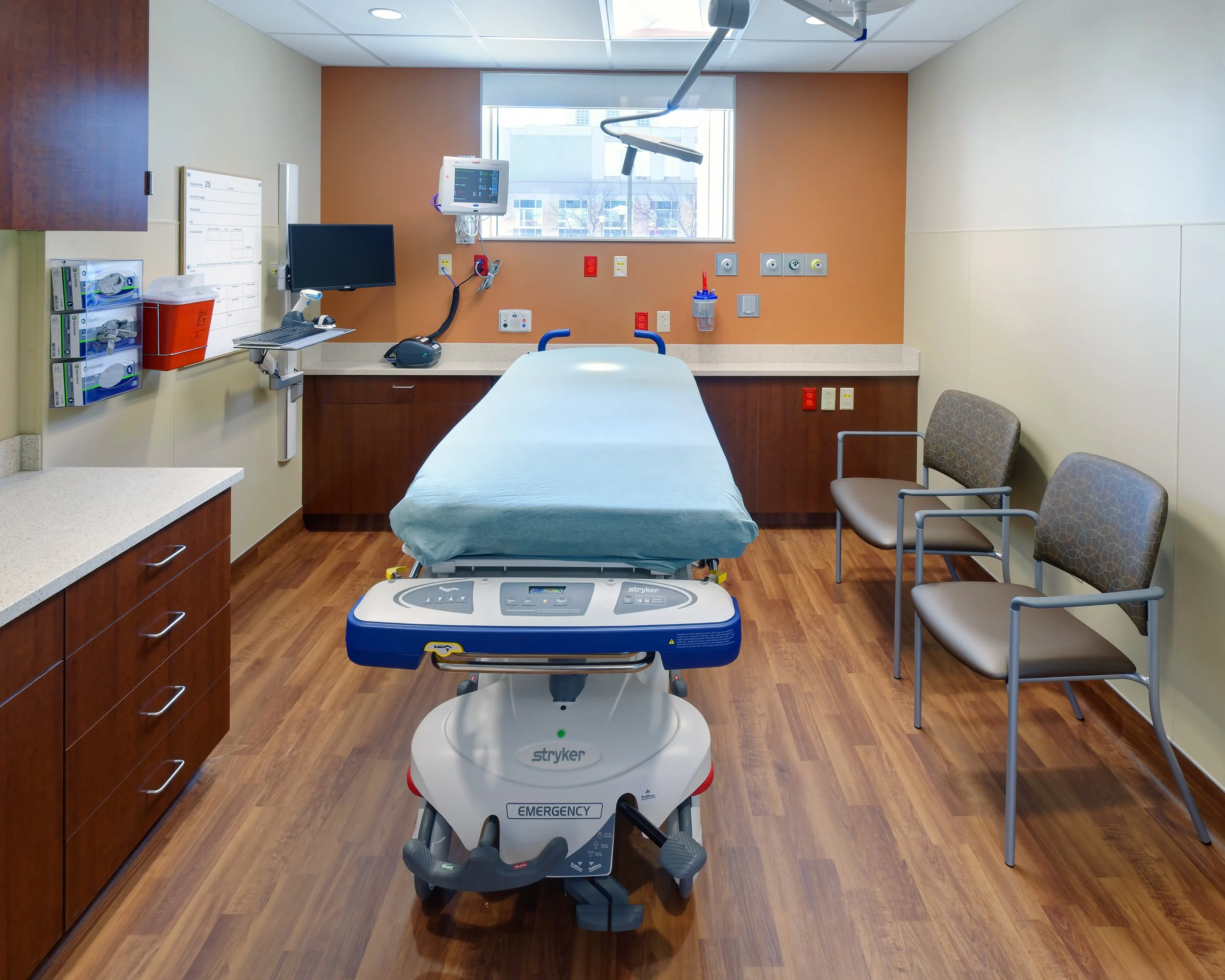
From the specific temperature of the lighting to the integration of anti-microbial finishes, every material choice is backed by data. In the specialized trauma bays and exam rooms, the technology is integrated seamlessly, ensuring that the "medical precision" required for recovery does not overwhelm the "human center" of the patient’s experience.