Research Medical Center
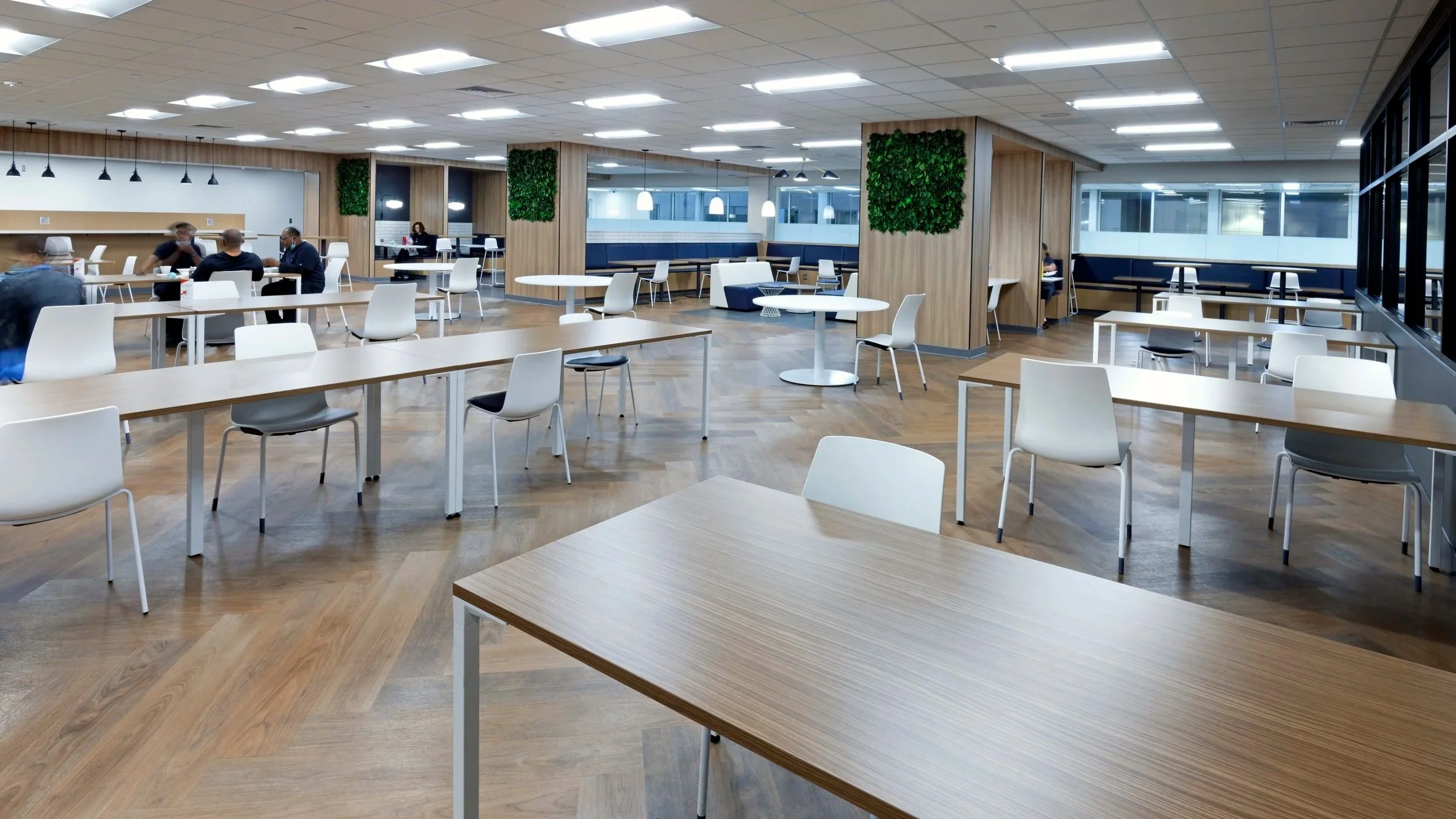
The Café at Research
The revitalization of the cafeteria at Research Medical Center serves as a vital case study in "Caring for the Caregiver." By transforming a traditionally utilitarian space into a vibrant, hospitality-forward dining commons, the architecture provides a necessary psychological break from the clinical intensity of the hospital.
Client:
Research Medical Center
Location:
Kansas City, MO
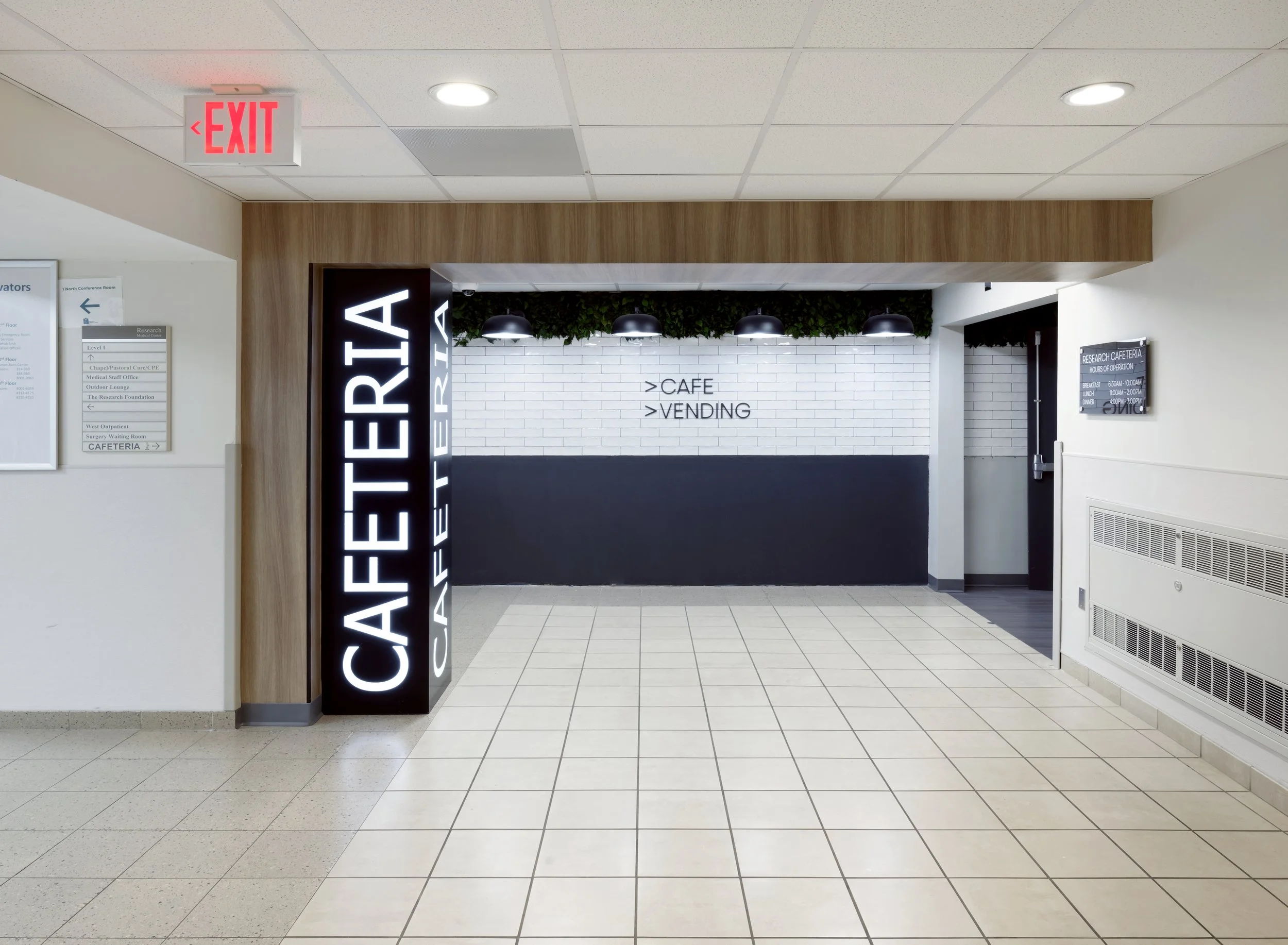
Design Philosophy in Practice
Caring for the Caregivers
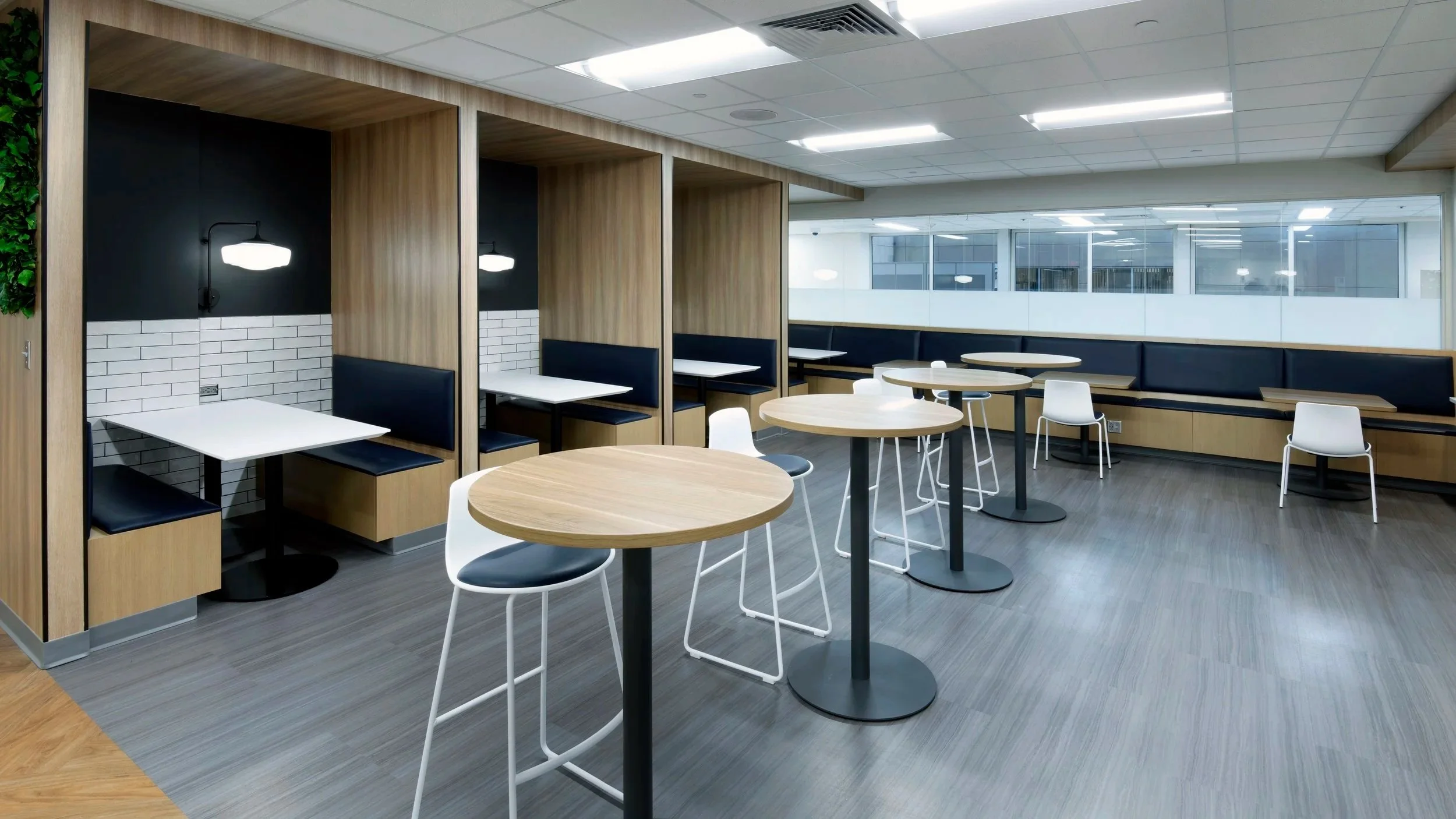
This space was designed specifically for the "Invisible User"—the staff members who need a true sanctuary during long shifts. By moving away from industrial cafeteria aesthetics and toward a modern, cafe-inspired atmosphere, the design offers a sense of respite that is critical to maintaining the high level of focus required for clinical excellence.
Biophilia is a Biological Mandate
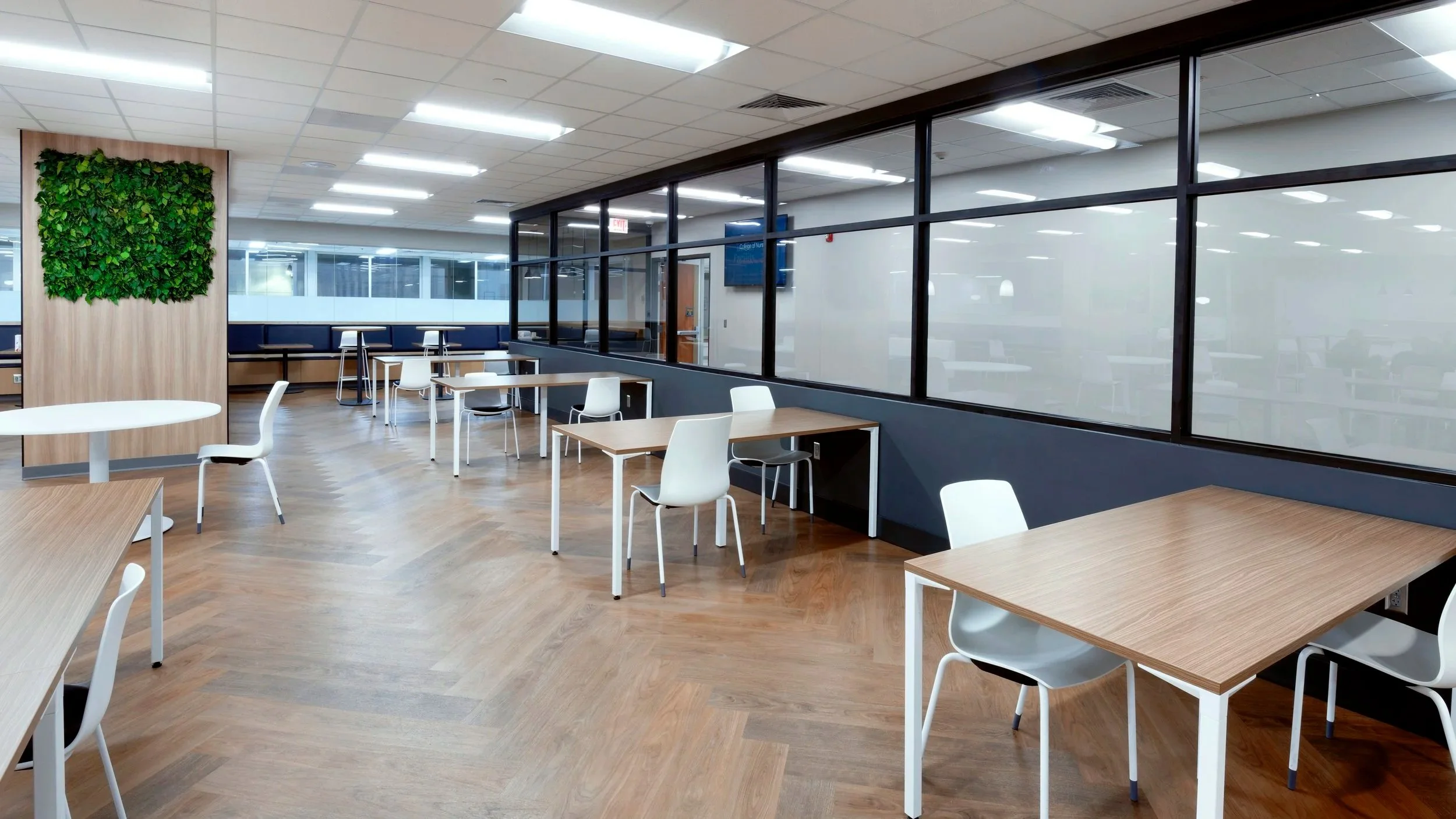
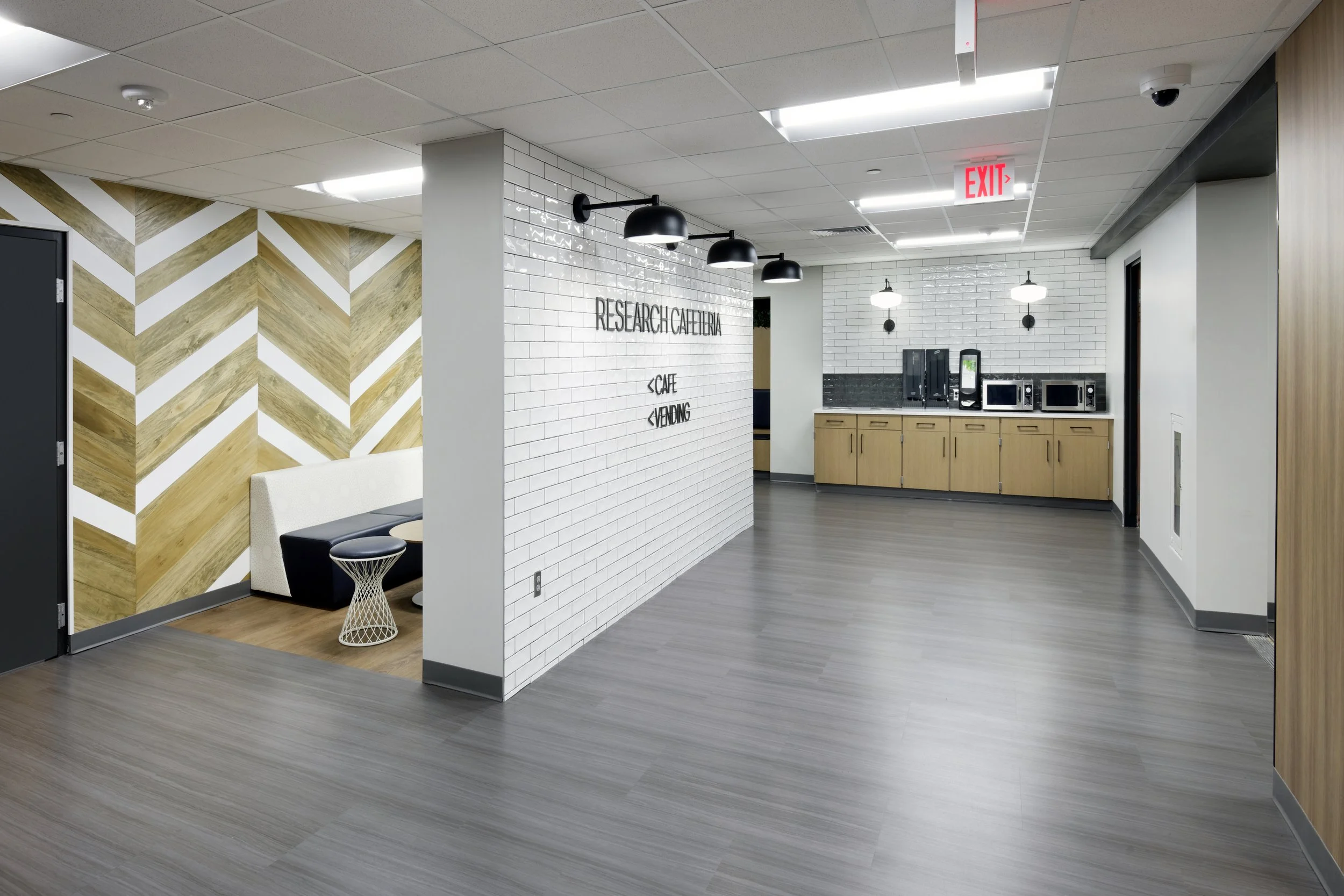
To activate the body’s natural parasympathetic response, the design utilizes a rich palette of organic textures. The integration of wood-look slats, stone-inspired surfaces, and botanical greenery helps to reduce cortisol levels. These elements bridge the gap between the built environment and the natural world, providing a sensory "reset" for both staff and visiting families.
Equity in Atmosphere
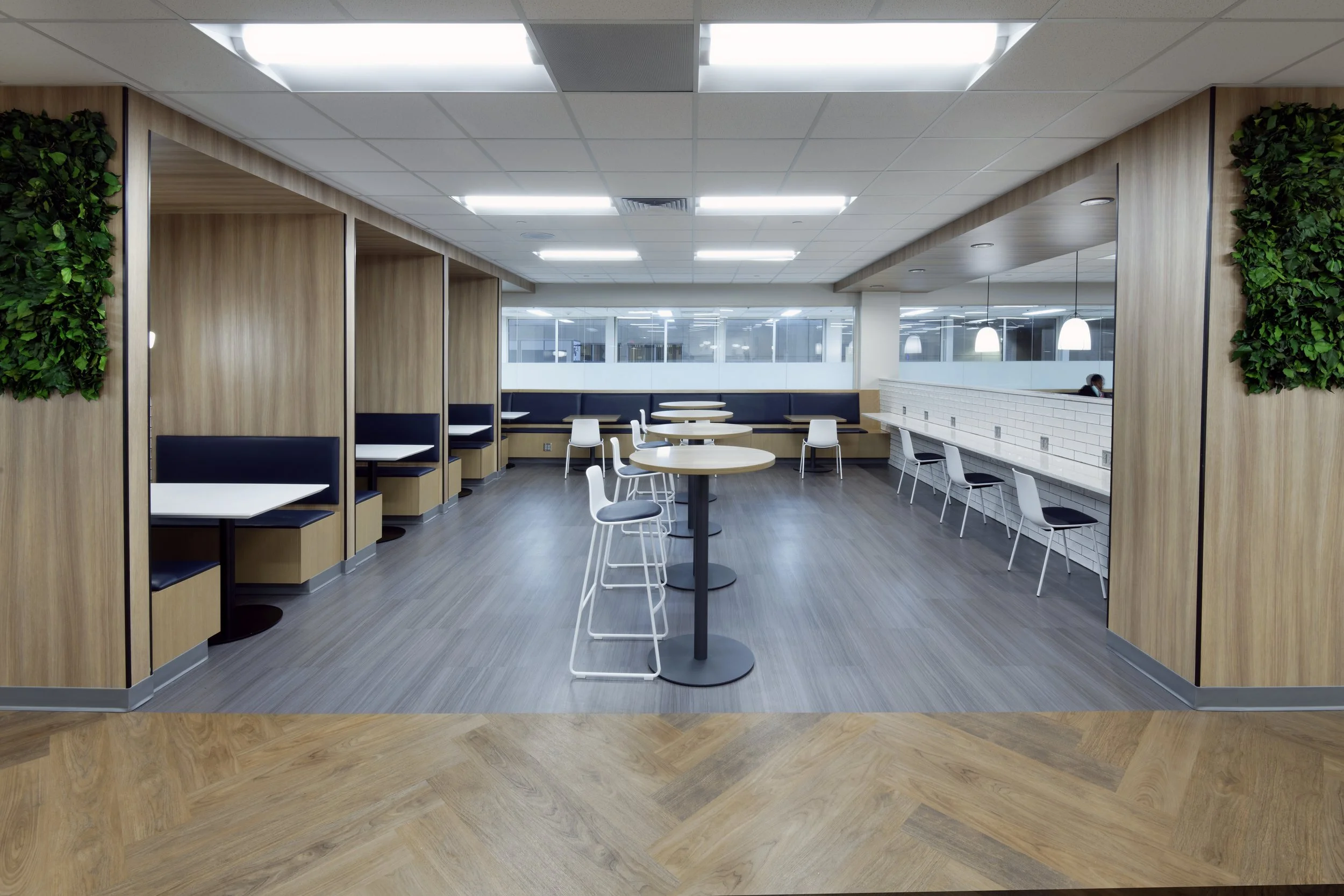
Healing environments are a fundamental right, even in non-clinical zones. The "democratization of light" is achieved through an open-concept layout that maximizes the reach of natural illumination. The variety of seating options—from intimate booths to collaborative communal tables—ensures that every user can find a space that fits their emotional and social needs, whether they seek quiet solitude or social connection.
Function as the Foundation; Healing is the Purpose
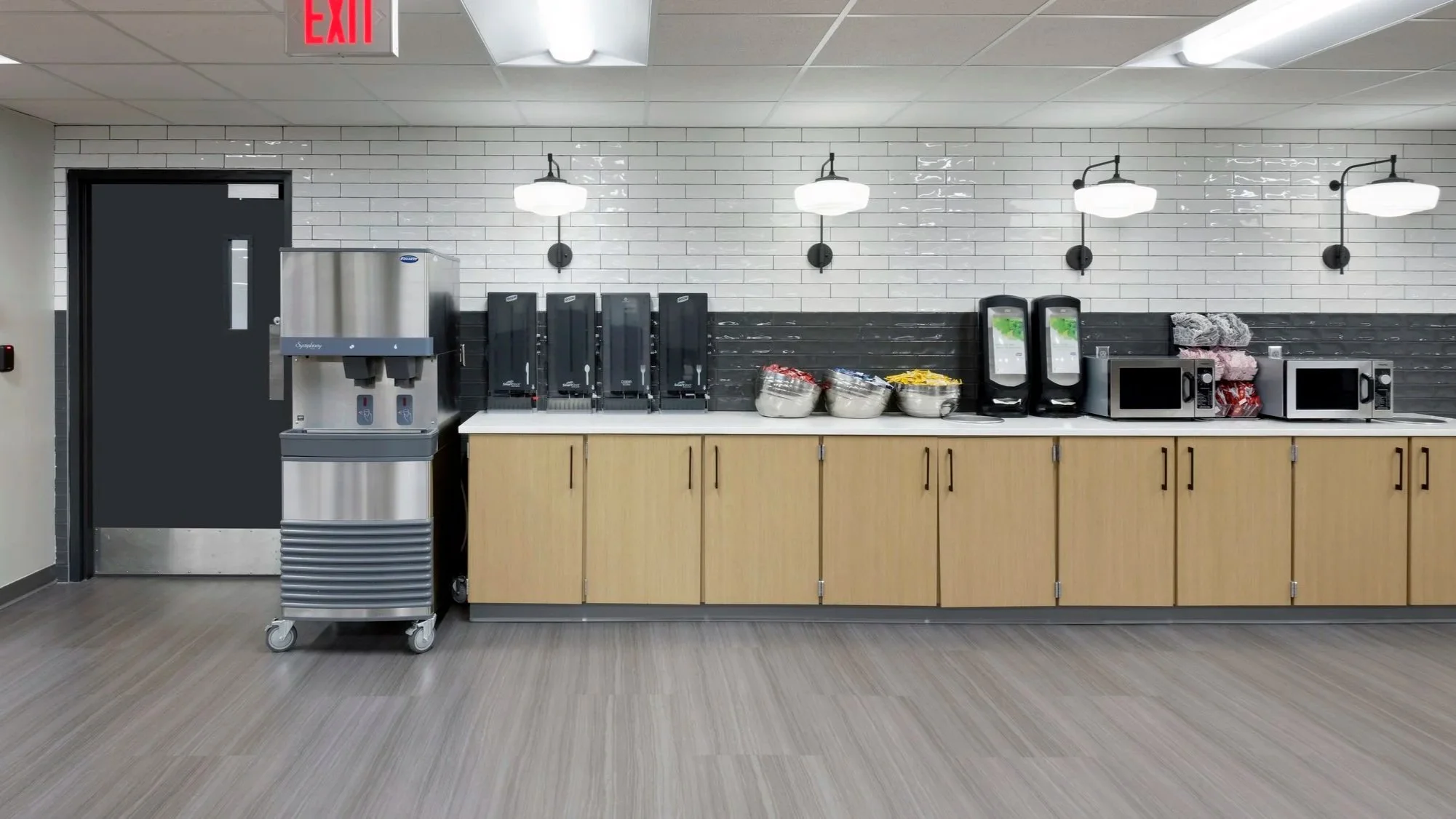
While the aesthetics lean toward hospitality, the foundation remains rooted in high-performance design. The flow of the server" and coffee bar zones is engineered for surgical efficiency, ensuring that staff can navigate the space quickly without feeling rushed. The acoustics are meticulously managed through varied ceiling heights and soft textures, preventing the "echo-chamber" effect of traditional hospital dining halls.