Western Missouri Medical Center
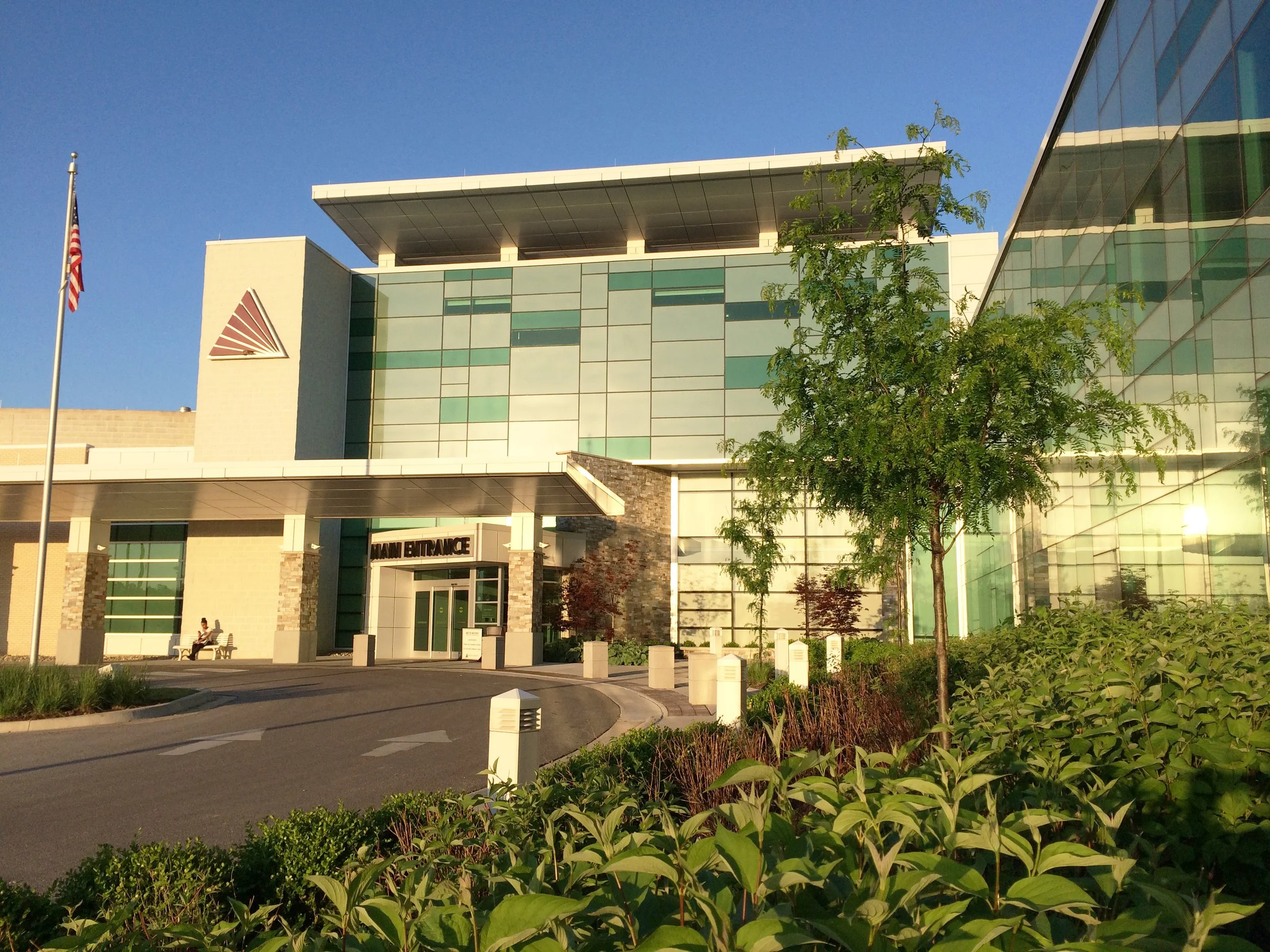
A Restorative Gateway
The expansion and modernization of Western Missouri Medical Center serves as a masterclass in regional healthcare excellence, where the architecture acts as a bridge between high-capacity medical technology and the natural beauty of the Missouri landscape.
Client:
Western Missouri Medical Center
Location:
Warrensburg, MO
Design Philosophy in Practice
Biophilia as a Biological Mandate
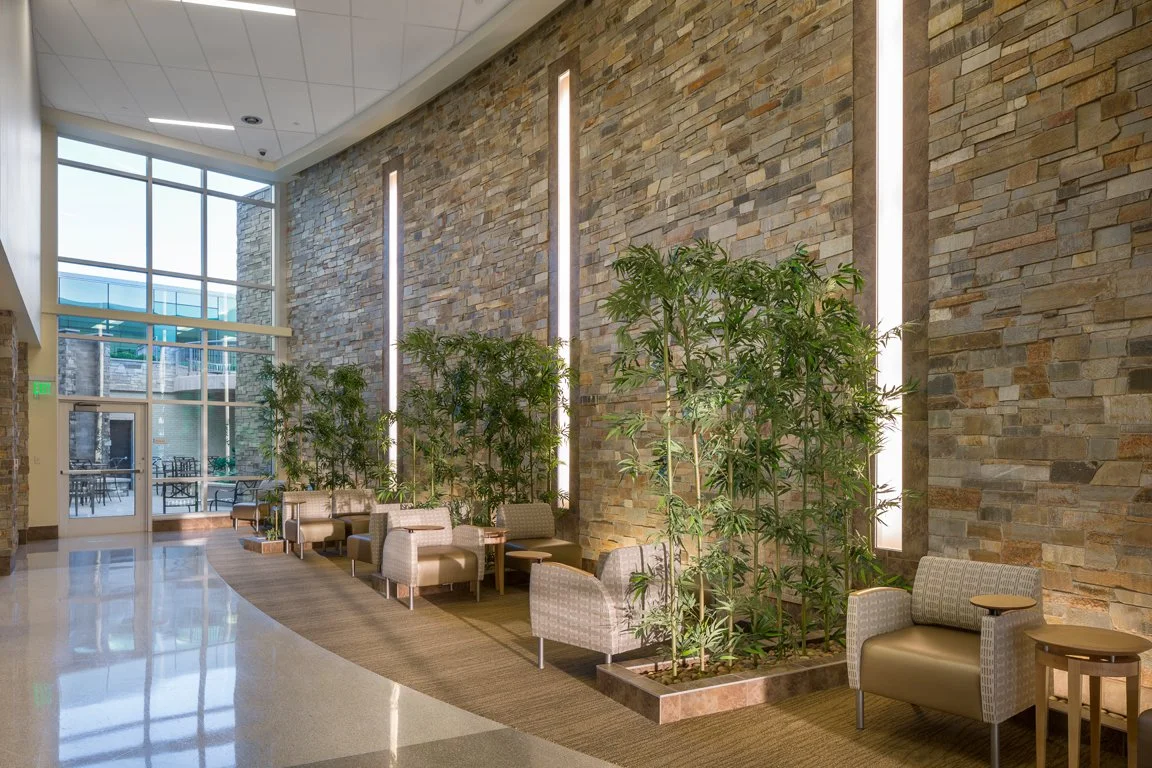
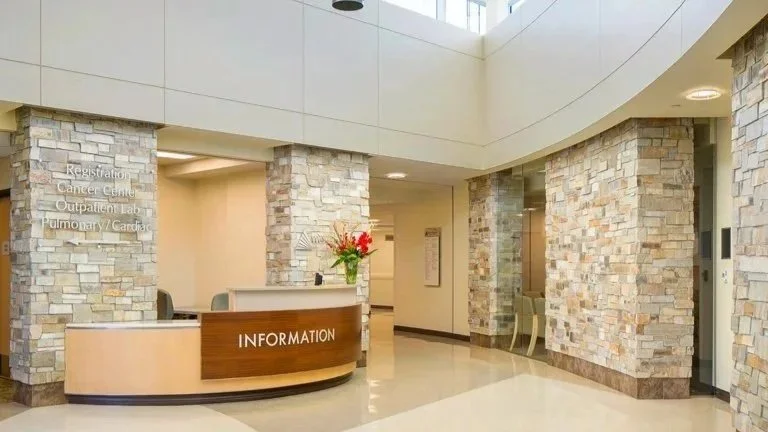
The design leans heavily into the restorative power of nature. This is most evident in the soaring interior stone walls that transition seamlessly from the exterior facade. By pairing these rugged, organic textures with internal greenery and towering bamboo installations, the space activates the body’s innate connection to the outdoors, creating a "healing garden" atmosphere within a sterile clinical environment.
Equity in Atmosphere
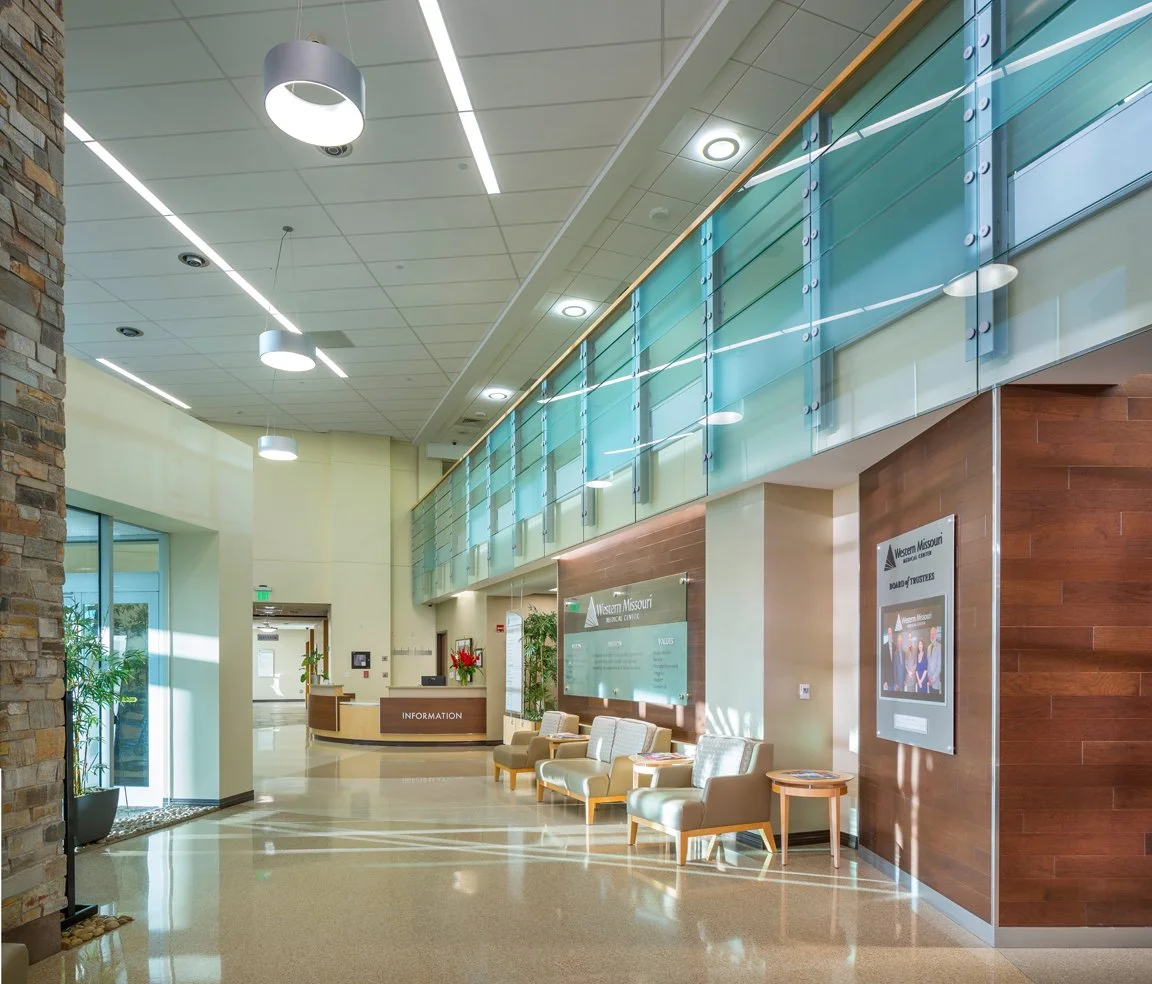
The "democratization of light" is achieved through a glass-forward curtain wall system. The lobby is flooded with natural illumination, reducing the reliance on harsh overhead lighting and providing clear, restorative views of the horizon. Whether a patient is arriving for a routine check-up or a family is waiting during a critical procedure, the environment offers a universal standard of comfort.
Evidence-Led, Human-Centered Experience
Every architectural choice serves the goal of well-being. The use of high-volume ceilings and glass balustrades creates an airy, unconfined feeling that mitigates the anxiety often associated with hospital visits. Evidence-based acoustics—delivered through strategic material transitions from polished terrazzo to soft-surface waiting zones—ensures that the "Information" and "Outpatient" hubs remain calm, quiet, and manageable.
Function as the Foundation; Healing as the Purpose
The Main Entrance is defined by a massive, protective cantilever. This isn't just a design statement; it is a functional embrace, shielding patients from the elements while clearly signaling a place of safety and transition. The architecture balances the "Medical Office" and "Outpatient Services" into a unified campus that feels cohesive rather than fragmented.